
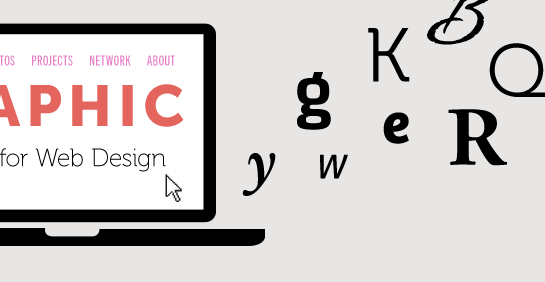
Typeface is commonly referred to as a font or font family, but it’s actually a set of fonts designed with common characteristics composed of glyphs. Font refers to the individual files that are a part of the font family or typeface. Serif typefaces are distinguished by small, decorative lines usually at the top or bottom of the letters. Sans serif typefaces don’t have these decorative lines.
Hypertext Markup Language (HTML) is starting point, which is used to add content and structure the page and is the standard markup language for documents designed to be displayed in a web browser.
Cascading Style Sheets (CSS) is for presentational effects and styles and is a language that describes the style of html. In other words, it shows the elements which should be displayed, such as colours and fonts.
JavaScript is used for adding interactivity, such as clicking through an image gallery, or dynamically changing content with a button click or a page scroll.
CSS font families: there are two types of font family, generic family and font family respectively.
Generic family – a group of font families with a similar look (like “Serif” or “Monospace”).
Font family – a specific font family (like “Times New Roman” or “Arial”).

To set the font family in your web projects, use the CSS property font-family. It’s recommended.
Not all operating systems have the same fonts installed, or the user may have deleted it. If the user doesn’t have the font installed locally, your font-family declaration won’t display properly.
 ShuiMei Qu's Blog